
An AC tune-up is intended for a system that is generally operating but needs preventive maintenance. AC repair is the better starting point when the system has an active problem such as no cooling, failure to start, persistent freezing, or another clear malfunction.
That distinction sounds simple until you are looking at a scheduling page and trying to decide which appointment fits your situation.
You do not need to diagnose the entire system yourself. The goal is simply to describe what the air conditioner is doing as accurately as possible so Fire ’n’ Ice Heating & Cooling Inc. can help guide you toward the appropriate HVAC service.
What Is an AC Tune-Up?
This preventive service is intended for an air-conditioning system that is generally operating as expected.
The purpose is to evaluate the system’s condition, identify maintenance needs, and prepare the equipment for continued seasonal use. Depending on the system and the HVAC company’s maintenance process, that may include checking operating conditions, airflow, electrical components, drainage, controls, and other equipment areas.
A tune-up may be appropriate when:
- The air conditioner is cooling normally.
- There is no known malfunction.
- Preventive service is due.
- You want the system checked before or during a period of heavy use.
- Your equipment manufacturer or maintenance plan calls for routine service.
Tune-ups and AC maintenance are often used to describe the same general type of preventive service, although the exact work included can vary by company.
Homeowners who are looking for preventive care can learn more about AC maintenance in Downers Grove.
What Is AC Repair?
AC repair starts with an existing symptom or malfunction.
Instead of performing preventive service on a normally operating system, the technician evaluates a specific problem, determines its cause, and recommends the appropriate next step.
Examples of situations that may call for air conditioning repair include:
- The AC is not cooling.
- The system will not start.
- Ice repeatedly forms on the equipment.
- A significant new noise develops.
- There are electrical symptoms.
- Water is appearing where it should not.
- Airflow suddenly becomes weak.
- The system shuts down unexpectedly.
These symptoms can have multiple causes, so homeowners should avoid trying to identify a failed component based on one sign alone.
If your system already has an active problem, AC repair in Downers Grove is usually the better service path than routine maintenance.
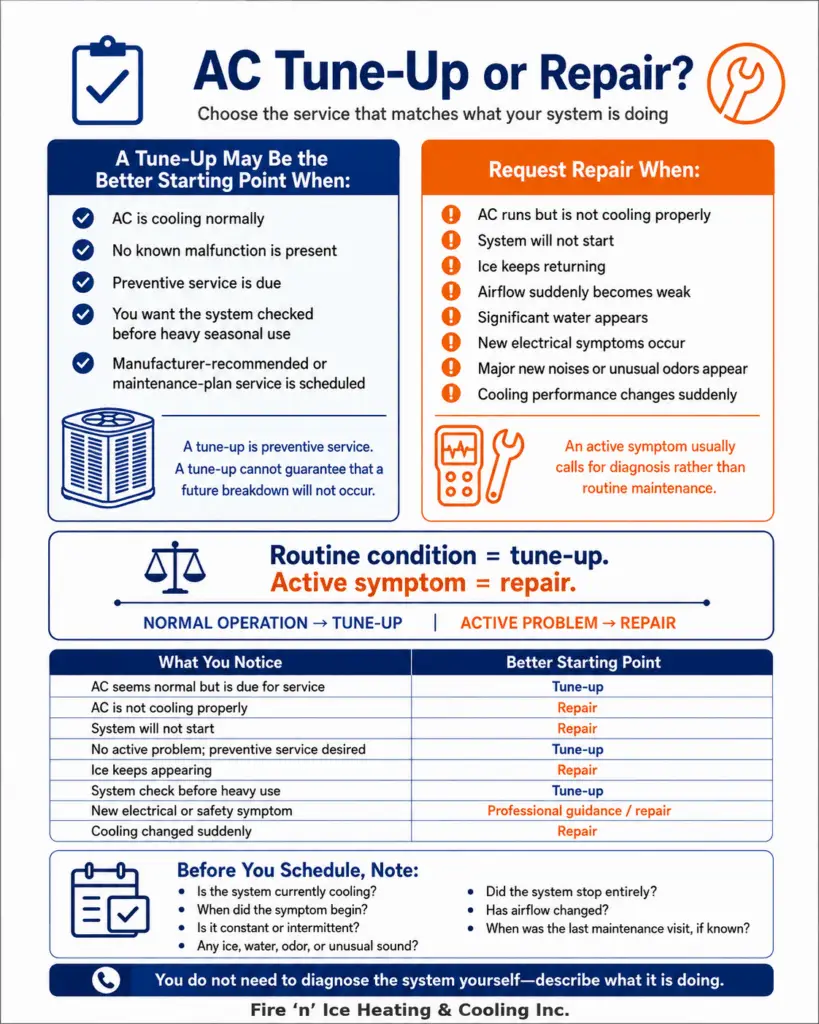
AC Tune-Up or Repair? Use This Quick Comparison
The table below can help you decide which type of appointment is the better starting point.
| What You Notice | Better Starting Point |
|---|---|
| AC seems normal but is due for service | Tune-up / maintenance |
| AC runs but is not cooling properly | Repair |
| System will not start | Repair |
| No active problem, but you want preventive service | Tune-up |
| Ice keeps appearing | Repair |
| You want the system checked before heavy seasonal use | Tune-up |
| New electrical or safety-related symptom | Repair / professional guidance |
| Cooling performance changed suddenly | Repair |
| System is operating normally and maintenance is scheduled | Tune-up |
These are general starting points. The appropriate appointment can depend on what the system is doing when you schedule.
Signs Preventive Service May Be the Right Appointment
A tune-up may be the right appointment when there is no known malfunction and you are scheduling routine preventive care.
When an AC Tune-Up May Be Appropriate
If the system is starting, cooling, and operating normally, a tune-up gives a technician an opportunity to evaluate its condition as part of preventive service.
Preventive Service Is Due
You may already have a maintenance schedule based on manufacturer guidance, prior service recommendations, or a maintenance plan.
If no active problem has appeared, booking the planned AC maintenance visit is generally different from requesting a repair diagnosis.
You Want the System Checked for Continued Seasonal Use
Homeowners sometimes schedule preventive service because they expect the system to be working hard during hot weather.
A tune-up cannot guarantee that a future breakdown will never happen. It can, however, provide an opportunity to identify maintenance needs and assess the system’s current operating condition.
Signs You Should Request AC Repair
Once the air conditioner develops a clear symptom, the appointment shifts from preventive maintenance toward diagnosis.
The AC Is Not Cooling
The cause could involve several parts of the system, so avoid assuming the problem is a filter, thermostat, refrigerant issue, or failed component without a proper evaluation.
This is especially true when your AC is not cooling or cooling performance changes suddenly.
The System Will Not Start
An air conditioner that will not start has an active malfunction.
Homeowners can confirm basic thermostat settings, but repeated attempts to reset equipment, open panels, or work around electrical components should be avoided.
If the system remains unresponsive, request AC repair.
Ice Keeps Returning
Persistent or recurring ice should not be treated as a normal maintenance condition.
Because there are several possible reasons an AC may freeze, the cause should be evaluated rather than guessed from appearance alone.
If the ice keeps coming back, schedule a repair visit instead of assuming a standard tune-up will correct the problem.
New Water, Electrical, Odor, or Noise Symptoms Appear
New symptoms deserve more attention when they represent a clear change from normal operation.
Examples include:
- Significant water around HVAC equipment
- Repeated electrical issues
- Burning or other unusual odors
- Loud buzzing, grinding, rattling, or clicking
- Unexpected shutdowns
- Visible signs of damage
A sound or odor alone does not identify a specific failed part. Describe what you notice and let the technician determine the cause.
Comfort Changed Suddenly
A sudden comfort change is one of the clearest ways to separate preventive care from repair.
Examples include:
- Rooms becoming noticeably warmer than before
- Airflow dropping suddenly
- Cooling cycles changing dramatically
- Indoor humidity feeling different
- The system struggling to maintain the usual indoor temperature
Preventive maintenance is routine. A sudden performance change is an active symptom.
What If You Schedule a Tune-Up and the Technician Finds a Problem?
If a technician identifies a problem during preventive service, the next step depends on what was found and how additional diagnosis or repair is handled. Ask what the technician found, whether repair is recommended, and whether additional authorization or another appointment is needed.
What to Tell Fire ’n’ Ice When You Schedule
You do not need technical terminology when contacting an HVAC company.
A clear description of what the system is doing is usually more helpful than trying to name the failed component yourself.
Before calling or requesting service, note:
- Is the system currently cooling?
- When did the problem begin?
- Is the symptom constant or intermittent?
- Have you noticed ice?
- Is there unexpected water?
- Are there unusual odors or sounds?
- Did the system stop running completely?
- Has airflow changed?
- When was the last maintenance visit, if known?
You can also mention anything that changed shortly before the problem appeared.
For example, if the issue began after a power interruption, thermostat change, maintenance visit, or another event, share that information with the service team.
The more accurately you describe the symptoms, the easier it is for the company to understand what type of HVAC service you may need.
Schedule the Service That Matches the Problem
If your system needs attention but you are unsure which appointment fits, schedule an AC tune-up or request AC repair from Fire ’n’ Ice Heating & Cooling Inc. and describe what the system is doing.
You do not need to diagnose the problem yourself. Tell the Fire ’n’ Ice team whether the system is operating normally or showing an active symptom so they can help determine the appropriate service appointment.