
When a furnace has been sitting unused through warmer weather, the first cold night should not be the first time you find out whether it will start normally. Before heating season, homeowners can check the thermostat, filter, vents, and a few other basic conditions without opening equipment or attempting repairs.
Those readiness checks are not the same as a professional furnace tune up. A seasonal check can help you notice obvious changes, while a technician can evaluate operating conditions and components that should not be inspected by the homeowner.
Fire ’n’ Ice Heating & Cooling Inc. provides heating maintenance for homeowners in Downers Grove and surrounding areas. A seasonal check at home can help you notice obvious changes, while a professional furnace tune-up covers system inspection, testing, cleaning, and adjustments that homeowners should leave to a trained technician.
Furnace Tune-Up Checklist for Homeowners
Use this tune-up checklist to make simple seasonal readiness checks without opening the furnace or attempting repairs.
1. Check the Thermostat Before You Need Heat
Start with the thermostat before assuming there is a furnace problem.
Confirm that it is:
- set to the appropriate heating mode;
- requesting a temperature above the current room temperature;
- displaying normally; and
- following the schedule or program you expect.
Then note whether the heating system responds.
If the thermostat does not behave as expected, review Thermostat Not Working? 7 Checks Before Heating Season before moving on. A thermostat issue and a furnace issue can look similar from inside the house, so it helps to separate those possibilities first.
2. Look at the Furnace Filter
Check the filter if it is safely accessible.
Look for visible buildup and confirm that the filter appears to fit the system correctly. Follow the equipment or filter manufacturer’s guidance rather than assuming one replacement schedule is right for every household.
A heavily restricted filter can affect airflow and system operation, but replacing a filter does not guarantee that every heating problem will disappear. If airflow still seems weak or the system does not operate normally, the cause may require professional evaluation.
3. Make Sure Supply and Return Vents Are Clear
Before testing the system, walk through the home and check that supply registers and return-air openings are not blocked by:
- furniture;
- rugs;
- boxes;
- storage items; or
- other household objects.
The goal is only to remove obvious obstructions.
Do not modify ducts, change system balancing, or adjust internal dampers unless those steps are part of guidance from a qualified HVAC professional.
4. Test the Heating System Before the First Cold Snap
Testing the furnace before temperatures drop gives you a chance to notice an obvious problem before dependable heat becomes urgent.
Set the thermostat to call for heat and observe whether the system starts and whether warm air eventually reaches the occupied rooms.
Pay attention to what happens rather than trying to diagnose the cause yourself.
Useful observations include:
- whether the furnace starts;
- whether airflow reaches the rooms;
- whether the system stops unexpectedly;
- whether heating feels noticeably different from last season; and
- whether new sounds or odors appear.
The goal is not to run the furnace for an arbitrary amount of time. It is to confirm that the system starts, produces heat, and does not show an obvious change in operation before cold weather makes heating urgent.
5. Listen for New or Unusual Sounds
A furnace does not have to be completely silent, but a new sound is worth noting.
Homeowners may notice:
- rattling;
- grinding;
- banging; or
- persistent clicking.
A sound alone does not identify the failed component. The same symptom can have more than one cause.
If the noise is new, persistent, or accompanied by poor heating performance, note when it occurs and describe it when scheduling service. That information may help a technician understand what the system is doing.
6. Pay Attention to Odors
A furnace that has been idle for months may smell different when it first runs, but homeowners should not assume every odor is harmless.
Pay particular attention to odors that are:
- persistent;
- unusually strong;
- electrical or burning in character; or
- associated with suspected fuel-gas or combustion concerns.
Do not try to diagnose the source by opening the furnace or inspecting combustion components yourself.
If you notice a suspected fuel-gas, burning, or electrical odor, stop troubleshooting and seek professional help. If a carbon-monoxide alarm activates, follow the applicable alarm and safety guidance.
7. Check Carbon-Monoxide and Smoke Alarms
Heating-season preparation should also include checking smoke and carbon-monoxide alarms according to the manufacturer’s instructions.
Follow the instructions for the specific alarm model for testing, battery replacement, alerts, and replacement guidance.

What Fire ’n’ Ice Checks During a Furnace Tune-Up
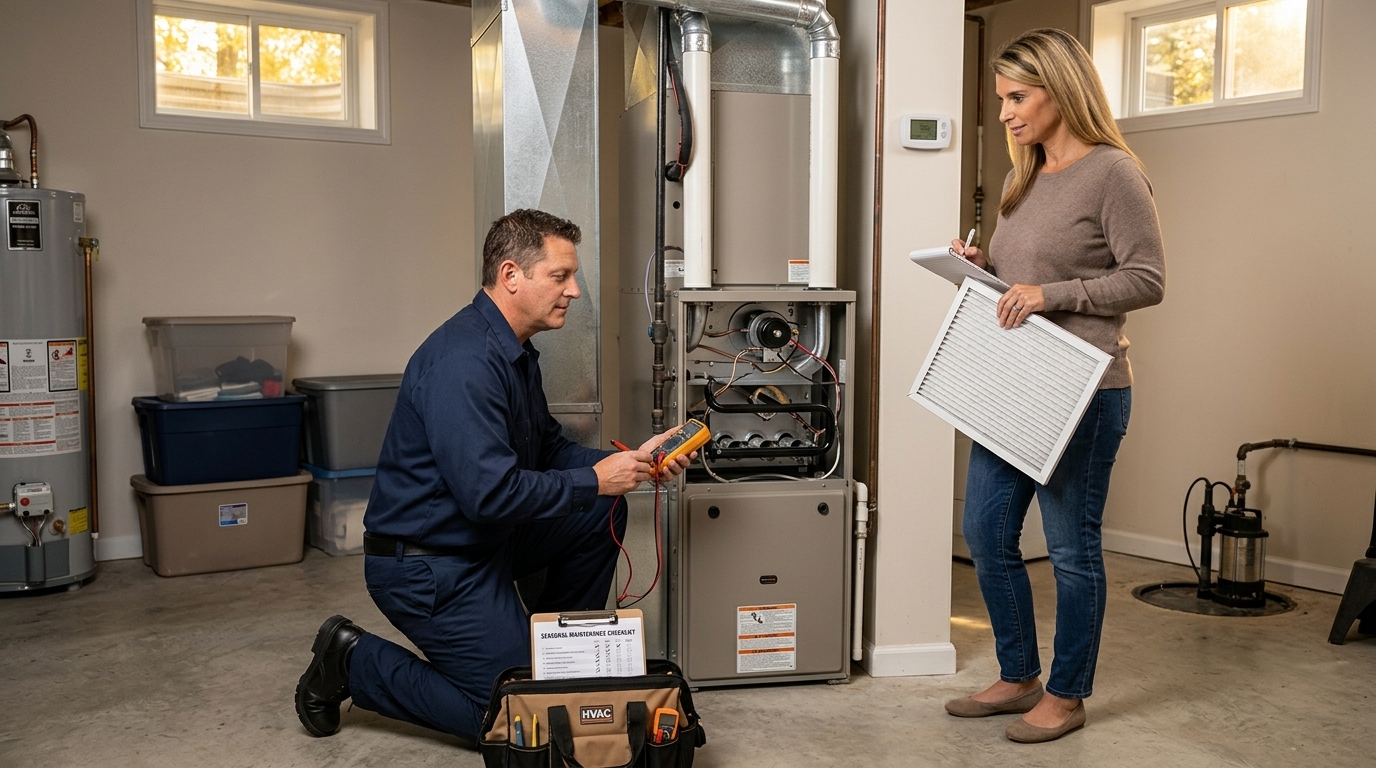
A professional furnace tune-up goes beyond the homeowner checks above. Fire ’n’ Ice technicians perform a detailed inspection and maintenance process that includes cleaning, testing, and adjusting furnace components.
During heating maintenance, our technicians:
- Check the furnace filter and clear dirt and debris buildup
- Inspect furnace components for signs of developing problems
- Clean and test the heating system
- Check airflow and recalibrate blower-system components
- Review the condition of the heat exchanger, burners, and connectors
- Check and adjust thermostat operation and temperature settings
If we find an issue during the tune-up, we’ll explain what we found so you can decide how to address it. In some cases, a smaller problem may be handled during the same visit rather than waiting for it to develop into a larger repair.
This is why a professional furnace tune up is different from a homeowner’s pre-winter checklist. The checks you perform at home can help identify obvious changes, while professional maintenance allows a technician to inspect and service parts of the heating system that homeowners should not attempt to evaluate themselves.
Signs You Need Furnace Repair Instead of a Tune-Up
A tune-up is preventive service. It is not a substitute for repair when the furnace already has an active operating problem.
Heating repair may be the more appropriate service when:
- the furnace will not start;
- heat stops during operation;
- the system repeatedly shuts off;
- there is little or no warm airflow;
- a persistent abnormal sound appears;
- the equipment displays an active fault or error condition; or
- another safety-related concern is present.
If your furnace is already malfunctioning, see Furnace Not Working? Safe Checks Before You Call and request furnace repair in Downers Grove rather than treating the problem as routine maintenance. Fire ’n’ Ice also provides 24/7 emergency heating repair service when a heating problem requires urgent professional attention.
When Should Furnace Maintenance Be Scheduled?
Furnace maintenance is best scheduled before the system enters its heaviest period of seasonal use. That gives you an opportunity to have the system inspected before dependable heat becomes a daily necessity.
Fire ’n’ Ice recommends annual furnace maintenance. Your equipment manufacturer’s maintenance instructions should also be considered when determining the appropriate service schedule for your particular system.
If the furnace has not been maintained recently, scheduling service before cold weather arrives can be more useful than waiting until the system develops an active problem. Once the furnace is already malfunctioning, the appropriate service may be repair rather than routine maintenance.
What to Tell the Technician Before a Furnace Tune-Up
A maintenance visit can be more useful when the homeowner explains what has changed since the previous heating season.
Before the appointment, make a short note of:
- whether the furnace has already been tested this season;
- any new noises;
- any unusual odors;
- rooms that seem to heat differently;
- changes in thermostat behavior;
- repairs performed last season;
- airflow complaints; and
- any intermittent problems that may not occur while the technician is present.
The goal is not to diagnose the furnace yourself. It is to give the technician a clearer picture of what you have observed.