
A thermostat not working before heating season can show up as a blank screen, no heat response, or a display that says the system is heating while nothing happens. The room may also feel warmer or cooler than the temperature shown on the display.
Start by checking the display, heating mode, temperature setting, and replaceable batteries on models that use them. These symptoms do not always mean the thermostat has failed. The thermostat sends the call for heat, but the controls, power, and heating equipment still have to respond.
We have helped Downers Grove-area homeowners with heating and cooling problems since 1977. You can read more about our family-owned HVAC background and how the company began.
Thermostat Not Working? Try These 7 Safe Checks
What seems like a heating thermostat problem may start at the wall control, but the cause can be elsewhere in the heating system. Safe thermostat troubleshooting focuses on what you can see and adjust without opening HVAC equipment or handling wiring.
1. Check Whether the Thermostat Display Is On
Look at the thermostat before changing any settings. Note whether the display appears normal, partially visible, or completely blank.
Some thermostats use replaceable batteries, while others receive power through the HVAC system. For a blank screen, follow only the manufacturer-approved homeowner checks for your model.
Once the display returns, request heat and watch what happens. A working display confirms that the thermostat has power, but it does not confirm that the furnace can complete the call for heat.
2. Verify Heating Mode and Temperature
Make sure Heat mode is selected and set the requested temperature above the current room temperature. Check the schedule because a programmed temperature change can affect when the thermostat requests heat.
ENERGY STAR’s thermostat setting and scheduling information covers smart thermostat controls and temperature schedules. Reviewing these settings can rule out a simple control issue before attention shifts to the heating system.
Record a displayed temperature that differs noticeably from how the room feels. Avoid changing calibration, sensor, or installer settings because the temperature difference alone does not reveal the cause.
3. Check the Fan Setting
Most thermostats have Auto and On fan settings. Auto generally runs the blower when the system calls for heat, while On can circulate air without active heating.
A running fan without warm air tells you that air is moving, not that the furnace is producing heat. After requesting heat, notice whether the blower starts and whether warm air follows.
4. Check Replaceable Batteries When the Thermostat Uses Them
Not every thermostat has homeowner-replaceable batteries. Check the manufacturer instructions for your model before removing or replacing them.
For thermostats with replaceable batteries, install the correct type as directed and request heat again. A restored display with no furnace response means the problem may extend beyond thermostat power.
5. Look for an Obvious Power Issue
The thermostat and heating equipment need power to operate. When both are unresponsive, a power problem may be preventing the heating system from starting.
Keep this check at the homeowner level. Do not connect thermostat wires, open electrical compartments, or repeatedly reset a breaker that keeps tripping.
When basic checks do not restore operation, HVAC service may be the next step. A heating repair evaluation can check the thermostat, controls, power, and heating equipment to locate where the call for heat stops.
6. Check Whether the HVAC Equipment Responds
Request heat, then listen and watch without removing a furnace cover or touching internal parts. What happens next can help separate a thermostat symptom from a larger heating-system problem.
These observations can show where normal operation changes, but they cannot identify a failed part on their own. What appears to be a furnace not working problem can involve the thermostat, controls, power, or heating equipment.
7. Record Error Messages and Unusual Behavior
Photograph any error message or code that appears. Note whether the furnace never starts, starts and shuts down, or works only sometimes.
Use the thermostat manufacturer’s homeowner instructions for basic messages. Avoid installer menus and service settings intended for professional setup or testing.
Record when the problem began and what happened immediately beforehand. These details can help a technician reproduce the problem and focus testing on the right part of the system.
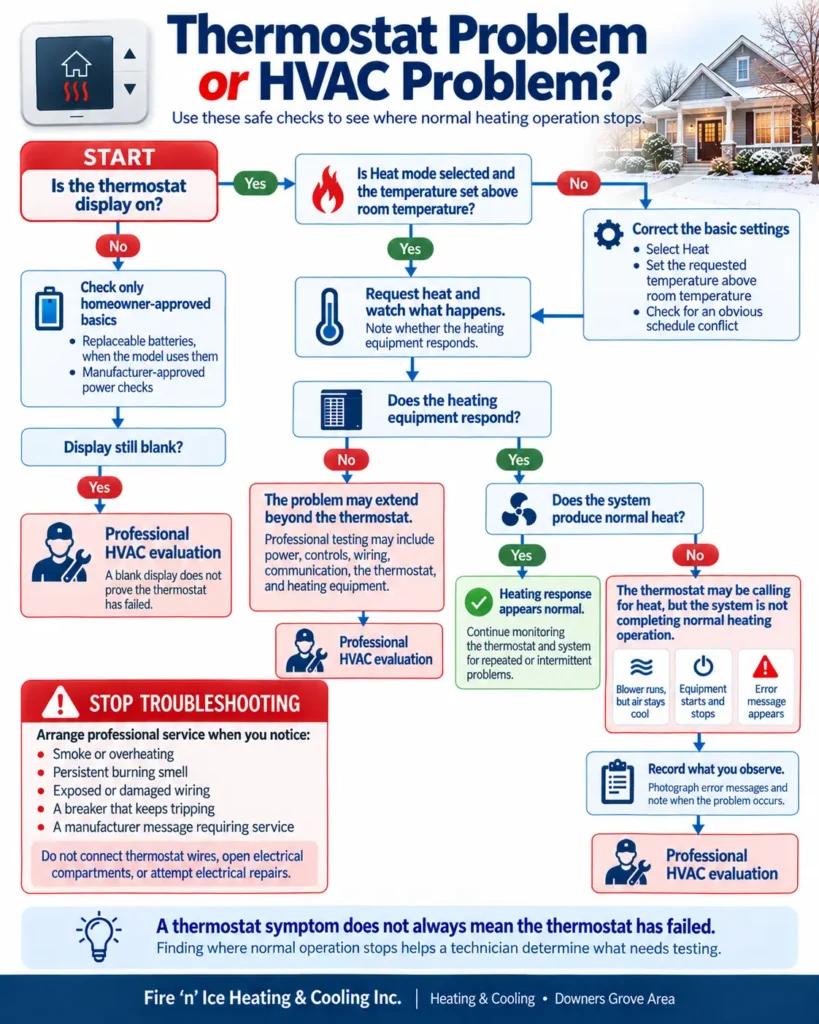
When the Thermostat May Not Be the Real Problem
A thermostat can appear to be the problem even when the cause is elsewhere in the heating system. The thermostat starts the call for heat, but the controls and heating equipment must respond before warm air reaches your home.
When we test a thermostat problem, we do not assume the thermostat needs replacement. The cause may involve power, wiring, controls, communication between components, the furnace, or the thermostat itself.
Homeowners searching for furnace repair near me may need the thermostat and heating equipment checked together when the furnace does not respond to a call for heat. A residential heating system evaluation can identify where normal operation stops before a repair or replacement is recommended.
Signs You Should Stop Troubleshooting
Some problems go beyond safe homeowner checks. Stop troubleshooting and arrange professional service when you notice:
-
- Smoke, overheating, or a persistent burning smell can signal a problem that needs professional attention.
- Exposed or visibly damaged wiring should be left alone rather than handled or repaired.
- A breaker that keeps tripping should not be reset repeatedly to restore operation.
- Equipment that remains unresponsive after basic checks may require professional testing.
- An error identified by the manufacturer as requiring service should be handled by a qualified technician.
Do not connect thermostat wires, make electrical repairs, or open electrical compartments. A sudden loss of heat may also make emergency HVAC service appropriate, depending on the system problem and conditions inside the home.
Without an immediate safety concern, addressing problems before colder weather gives you more time to correct them. Heating system maintenance before winter can help identify operating problems before heavier seasonal use.
What Information Should You Give the HVAC Technician?
You do not need to diagnose the system before calling for service. When homeowners call Fire ‘n’ Ice Heating & Cooling Inc. about a thermostat problem, these details give our team a clearer picture of what the thermostat and heating equipment are doing.
- Record the thermostat brand and model, along with the current and requested temperatures.
- Note what appears on the display and how the heating, cooling, and fan settings respond.
- Record whether the heating equipment starts after the thermostat requests heat.
- Note when the problem began and mention any recent thermostat, power, or system changes.
- Photograph error messages and record whether the problem happens constantly or only sometimes.
Keeping this information ready when scheduling HVAC service can make the initial conversation more useful. It gives the technician a practical starting point without requiring you to guess which part has failed.
Should You Replace the Thermostat or Repair the HVAC System?
A thermostat should not be replaced based on the symptom alone. The actual problem could involve the thermostat, wiring, controls, electrical power, compatibility, or the heating equipment.
A responsive thermostat with no furnace response usually means professional testing is the next step. An HVAC company can test the thermostat and heating equipment together before recommending a repair or replacement.
A larger repair or replacement can also raise questions about cost. HVAC financing options may become relevant once testing shows what work is actually needed.
Available incentives may also affect the cost of qualifying equipment. Available equipment rebates can be reviewed once the recommended work and equipment are known.
Diagnosis comes first because a new thermostat will not correct a problem elsewhere in the heating system. Testing before replacing parts can help keep the recommendation focused on the actual cause.
Frequently Asked Thermostat Questions
Quick answers to common thermostat and heating-system concerns.
Why is my thermostat screen blank?
A blank screen can involve depleted batteries on models that use them, loss of power, the thermostat itself, or another HVAC problem. Manufacturer-approved homeowner checks that do not restore the display point to the need for further testing.
Why does the thermostat say heat is on but the furnace is not running?
The thermostat may be requesting heat while another part of the system prevents the furnace from operating. The display alone cannot tell you whether the problem involves power, controls, wiring, the furnace, or another system component.
Can thermostat batteries stop the heat from working?
Batteries can affect thermostats that rely on them, but not every model uses homeowner-replaceable batteries. Follow the manufacturer instructions for your thermostat model before replacing them.
How do I know whether the thermostat or furnace is the problem?
Note the display, blower response, furnace startup, warm-air response, and error messages after requesting heat. These observations can show where normal operation stops, but professional testing may still be needed to identify the cause.
Should I reset a thermostat that is not working?
Only follow homeowner reset instructions provided by the thermostat manufacturer. Do not change wiring, enter installer settings, or repeatedly reset breakers in an attempt to restore operation.
When should I call an HVAC technician for a thermostat problem?
Call when safe homeowner checks do not restore normal heating or when the problem keeps returning. Stop troubleshooting sooner after noticing smoke, overheating, damaged wiring, repeated electrical problems, or an error requiring professional service.